La Comunidad de la Pala is a co-creation laboratory led by the Arquitectura Expandida collective. It brings together activist and artist collectives from Bogotá’s rural-urban edges to explore the right to the city through their cultural and ecological connections. The initiative has been held twice, in 2021 and 2024, with the participation of more than 30 groups—including environmentalists, gardeners, hip-hop artists, athletes, Indigenous communities, and citizen science groups—that celebrate the diversity of languages, ecosystems, and ways of living. It recognizes that ecological sustainability depends on the social and organizational strength required to defend it, especially along rural-urban edges, where urban pressures are particularly intense.
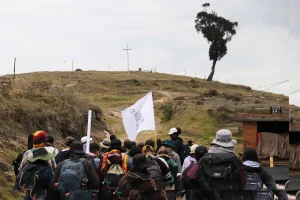
The 2024 edition unfolded over ten months and began with four tours led by the invited organizations, focusing on regional dynamics, urban pressures, forms of cultural expression, and relationships with other forms of life. Accompanied by white flags evoking peace with the environment, these walks became exercises in territorial empathy and moments of cartographic, visual, and sound-based data collection, later translated into collective works.
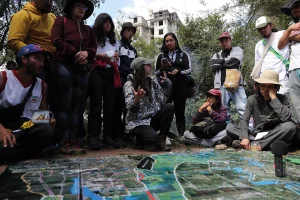
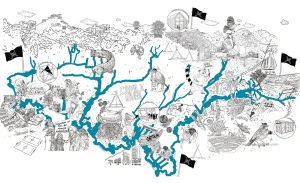
Over the following months, six co-creation laboratories produced a range of works, including an audiovisual series on invisible data (Oculto), a short documentary-fiction film about memory and hope (Ubanyquy), a collective hip-hop piece (Código egagrópila), a graphite drawing depicting local species and rituals (Reencuentro), and a perceptual map addressing water, threats, and non-human inhabitants (La Comunidad de la Pala y el Pedazo).
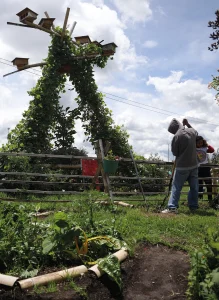
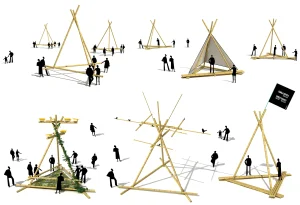
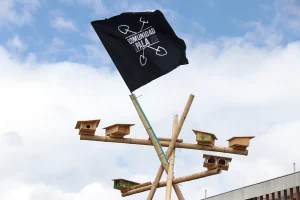
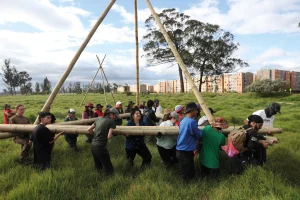
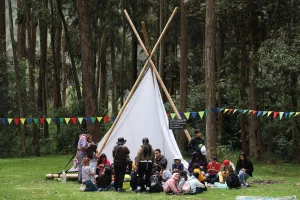
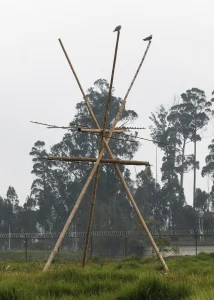
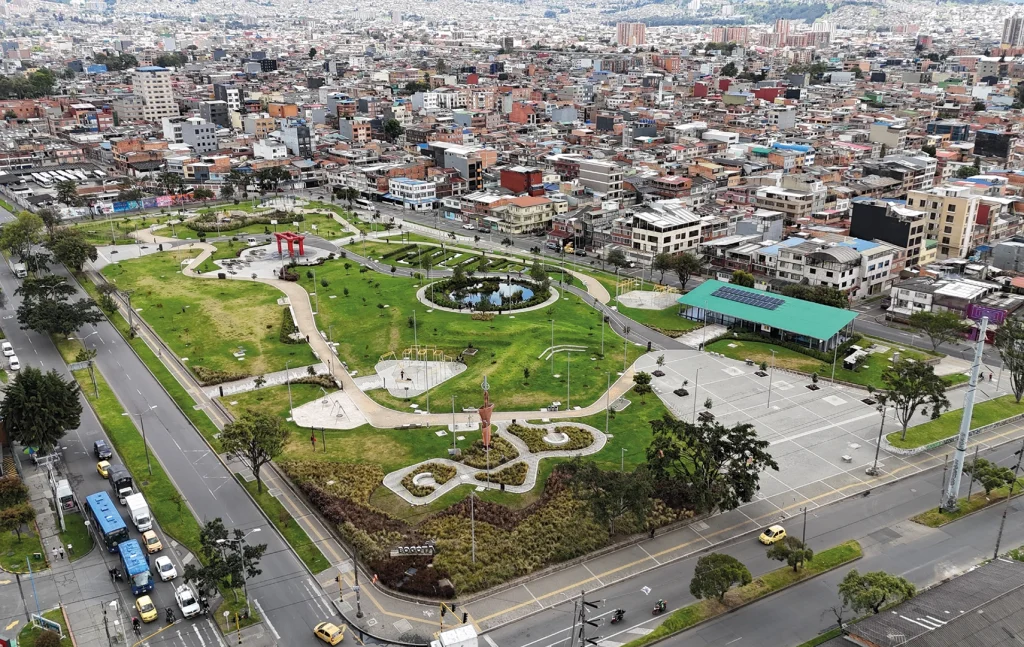
The sixth project, Las Antenas, became the most visible symbol of the process: six-meter-high bamboo structures installed where the collectives operate. Each antenna has a unique design, adapted to the ecosystem and social uses of the space. In Alto Fucha, they serve as gathering spaces within a rural-urban forest; in the Chiguasuque wetland, they function as bird perches and as a meeting place for the Muisca Council of Bosa; and in Parque del Bicho, in Bosa Porvenir, they act as pollinating antennas that challenge the hostile design of metropolitan urban parks and propose spaces of life in the face of violence. Their replication across different territories reinforces the idea of ecological and affective connectivity between non-contiguous areas linked by community and natural networks.
On August 15, 2024, after a day spent at the Chisas garden, members of the Bicho collective were victims of an armed attack in which Camila Ospitia and Camilo Sánchez, also known as Mc-Cub, were killed. Since then, the project has focused its energy on supporting the affected groups through the creation of memory devices—letters, furniture, and black flags—while also analyzing the forms of violence that permeate grassroots environmental movements: institutional and police violence, whether through action or omission; violence against collective action; environmental violence; violence that threatens physical integrity; and the social and media stigmatization of young people from peripheral neighborhoods.
These reflections and creations were presented in an exhibition co-curated with Material, a Bogotá-based space for thought, research, and visual culture practices. More than 40 black flags occupied the Plaza de Bolívar in an act of solidarity and collective mourning. The image of bodies coming together—carrying antennas or marching with flags—captures the performative power of grassroots movements: their ability to negotiate the city and produce new urban scenographies that give rise to narratives of rights.
The 2024 edition brought four of Bogotá’s rural-urban edges into dialogue through the work of artist Cristian Martínez: the Eastern Hills (La Juntanza Fucha-Zuque and La Fuchachada), the northern edge of the city (El Parche de la Reserva Van der Hammen and Oculto), Ciudad Bolívar (Cerro Seco Se Defiende and Ojo al Sancocho), and the Bogotá River (Las Calles del Aguante and Los Códigos del Pedazo). The project received support from the European Union National Institutes for Culture (EUNIC), the Bogotá Secretariat of Culture, and the Colombian Ministry of Culture.