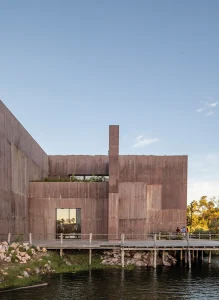
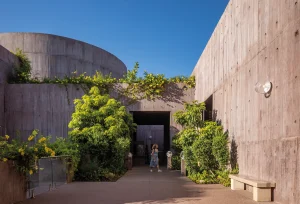
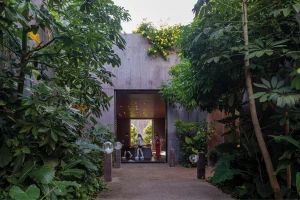
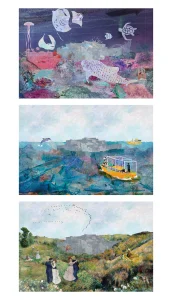
The Sea of Cortez Research Center emerged from the understanding that human beings do not control nature, but are instead part of it and, as such, must find ways to re-establish a symbiotic relationship with their environment. Conceived as a ruin—whether from the past or the future—overtaken by nature that acts as a window into a hidden world, the project functions as an educational and research center devoted to one of the richest and most biodiverse ecosystems on the planet: the Sea of Cortez.
The project entered its planning phase in 2018 and was inaugurated in 2023. It was promoted by Ernesto Coppel-Kelly, with support from the governments of Sinaloa and Mexico. The design was led by Tatiana Bilbao ESTUDIO, with Space Haus and Ocean Wise responsible for the exhibitions, SENER for engineering, Lightchitects for lighting, and Kingu Mexicana as general contractor. The project is part of the regeneration program for Mazatlán Central Park, with an approximate investment of $1.8 billion Mexican pesos. Its vision is to become a space for environmental education, marine biodiversity conservation, and scientific outreach, offering educational programs, exhibitions, laboratories, auditoriums, public gathering spaces, and a program for the conservation and rehabilitation of marine species.
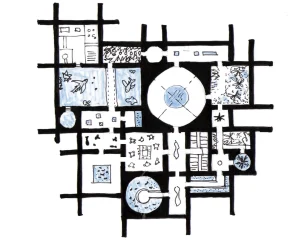
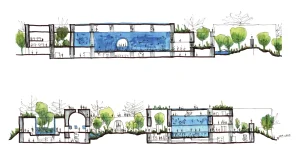
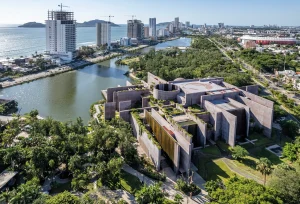
Through its architecture, the building seeks to bring the sea and the land together through an intervention far removed from any pre-established typology. The 17,300 m² project is conceived as an orthogonal structure of pigmented concrete walls that, across three levels, integrate the program, structure, surroundings, facilities, and connection with public space, while extending irregularly outward to blend into the landscape. Its implementation prioritized sustainability, energy efficiency, and bioclimatic design, with animal welfare and ecological conservation understood as structural principles rather than afterthoughts.
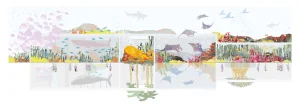
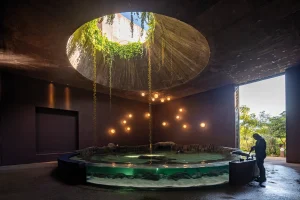
Through large marine tanks, visitors observe and interact with endemic wildlife. The path through the exterior public space, including the pedestrian walkway from the city to the top of the building, immerses visitors in nature.
The Center is conceived as an extension of the coastal landscape. The aim is for architecture to serve as a mediator between the city and the living systems that sustain it. For this reason, the project was conceived around the biological, behavioral, and environmental needs of the species it houses, recognizing them as bearers of intrinsic value beyond their usefulness to humans. The habitats it creates therefore reproduce natural dynamics of light, temperature, depth, and shelter, rather than functioning as mere settings for human observation. Instead of reinforcing an extractive logic, in which the sea is understood as both resource and spectacle, the project proposes the idea of interdependence, grounded in the understanding that the city only exists as a result of these ecosystems. In this sense, architecture ceases to be a gesture of domination and becomes a tool for reconfiguring imaginaries focused on more responsible ways of inhabiting the world.
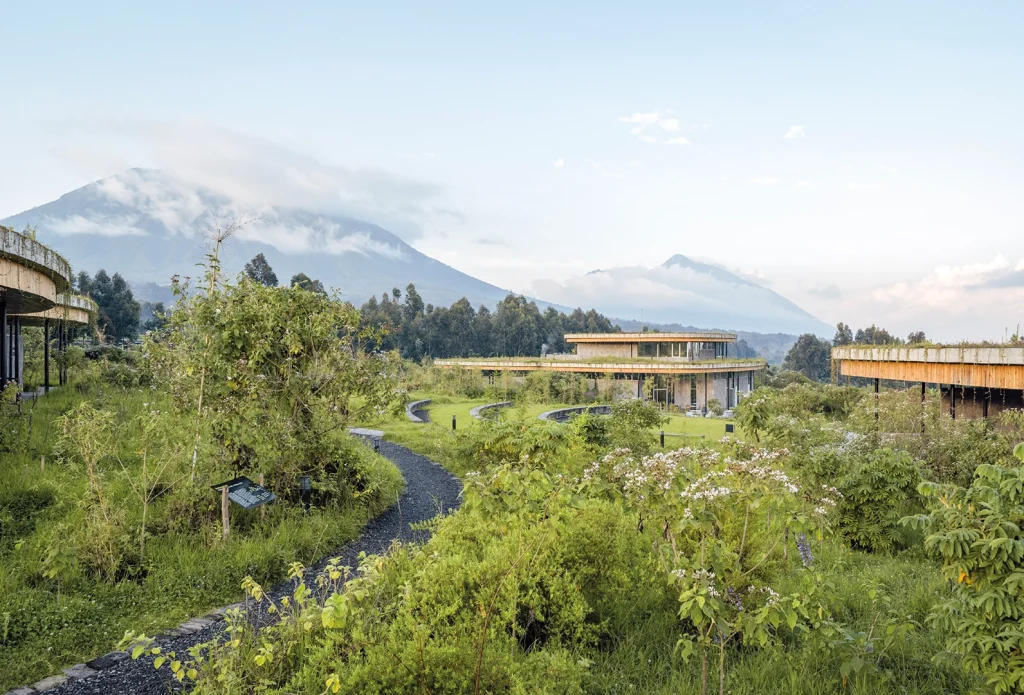
The multispecies environment housed within the tanks extends to the building’s relationship with its climate, vegetation, and open spaces, fostering microhabitats that blur the boundary between what is built and what is living. The Center not only houses biodiversity, but also experiments with a spatial idea of coexistence, one that seeks to shift the relationship between the observer and the observed so that nature may reclaim its place in our “human world.”